AI Advisory for Leaders Who Want Real Impact
Artificial Intelligence is easy to experiment with. Turning it into real organizational impact is much harder.
The challenge is rarely the technology.
Our Approach to AI Advisory
How We Turn AI Into Business Impact
Successful AI transformation starts with clarity. Organizations need to understand where they stand, where value exists, and which capabilities must develop alongside technology. Our work connects three elements.
- Orientation
Understanding the organization's AI maturity and defining the right next step.
- Capability
Building AI literacy and decision confidence across leadership and key teams.
- Execution
Turning promising initiatives into solutions that can scale across the organization.
When these elements work together, AI stops being a collection of pilots and becomes part of how an organization learns, decides, and improves.
About us
Our Mission
We help decision-makers turn Artificial Intelligence into clear strategy, informed decisions, and practical organizational capability.
AI is often discussed from a technology perspective. But for leadership teams the real questions are different:
- Where does AI create meaningful business value?
- What capabilities must the organization develop?
- How can initiatives scale beyond isolated pilots?
Our work focuses on answering these questions with clarity and realism.
Like an Experienced Guide in AI Transformation
AI transformation is rarely linear. Organizations face uncertainty, competing priorities, and rapidly evolving technology. What leaders need most in this environment is orientation.
We work:
- analytically
- discreetly
- and with a clear focus on practical outcomes
Our work combines deep AI expertise with years of executive decision-making experience.
No hype.
No unnecessary complexity.
Just a structured path forward.
Why AI Initiatives Fail
Most organizations do not struggle to start with AI. They struggle to turn promising experiments into lasting results. Across industries, two challenges appear again and again.
The PoC Trap in AI
When Artificial Intelligence Stays in Pilot Mode
AI initiatives often begin with a proof of concept. A use case is tested. The technology works. The pilot delivers promising results. And yet the organization does not move forward. This happens because pilots are often not designed for real organizational conditions.
Common signs include:
- •no connection to business strategy
- •limited or experimental data environments
- •missing integration into real processes
- •unclear ownership after the pilot
- •low adoption by operational teams
The result is predictable. AI remains an experiment instead of becoming a capability. Organizations accumulate pilots rather than progress. The issue is not experimentation. The issue is failing to design pilots with scale in mind. This is what we call the PoC trap.
AI Literacy
Why Organizational Capability Determines AI Success
AI transformation is not only a technology initiative. It is a capability shift. People do not need to become data scientists. But they do need to understand:
- •what AI can realistically do
- •where its limitations lie
- •how results should be interpreted
- •where human judgment remains essential
Without this foundation, AI is either overestimated or ignored. Both lead to poor decisions. Organizations that develop AI literacy make better investments, move faster, and manage risk more effectively. Technology alone does not transform organizations. People who understand how to use it do.
The AI Transformation Journey
Understand. Decide. Scale.
Organizations usually know AI is important. What they often lack is a structured way forward. Most successful AI transformations follow three stages.
- 01UnderstandBuilding Clarity Before AI Investments
At the beginning of the AI journey, leadership teams need orientation. In this phase we support organizations in:
- •assessing AI readiness
- •building a shared understanding of opportunities and risks
- •identifying relevant use cases
- •aligning leadership perspectives
The outcome is clarity and alignment across the organization.
- 02DecideTurning AI Insights into Strategic Direction
Once opportunities become visible, organizations must prioritize. AI creates many possibilities, but resources and attention are limited. We work with leadership teams to:
- •prioritize the most relevant AI initiatives
- •define realistic roadmaps
- •align initiatives with business strategy
- •establish ownership and governance
Instead of scattered experimentation, organizations gain a clear direction.
- 03ScaleFrom AI Pilots to Organizational Capability
Starting AI initiatives is relatively easy. Scaling them is much harder. Successful scaling requires:
- •integration into real processes
- •internal capability development
- •clear responsibilities
- •structured learning across initiatives
At this stage AI stops being an isolated innovation effort and becomes part of how the organization operates. This is where sustainable value emerges.
Team
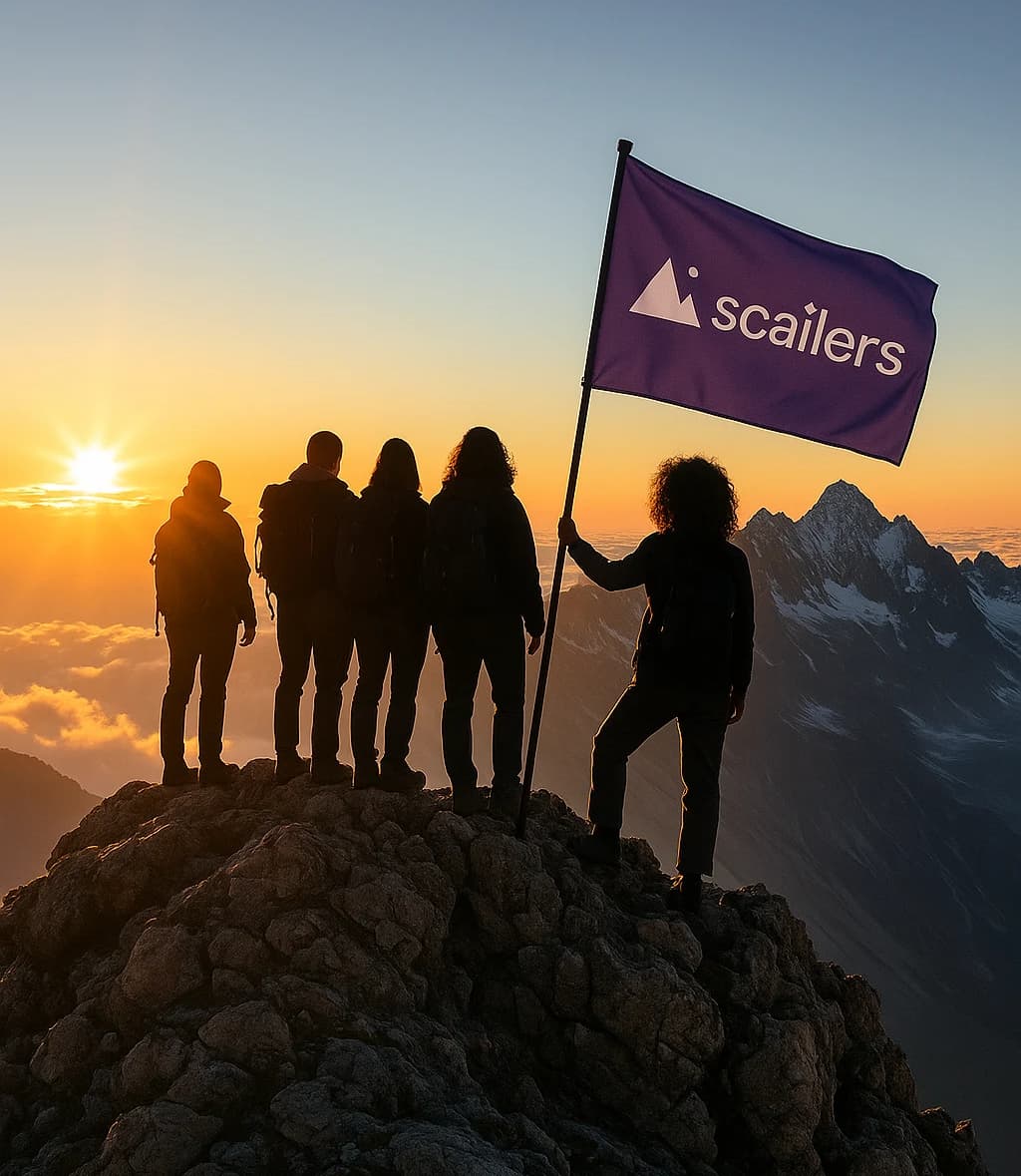
As your strategic partner, we think like an experienced mountain guide: we know the terrain, help choose the route, provide safety — and stay by your side until the goal is reached.
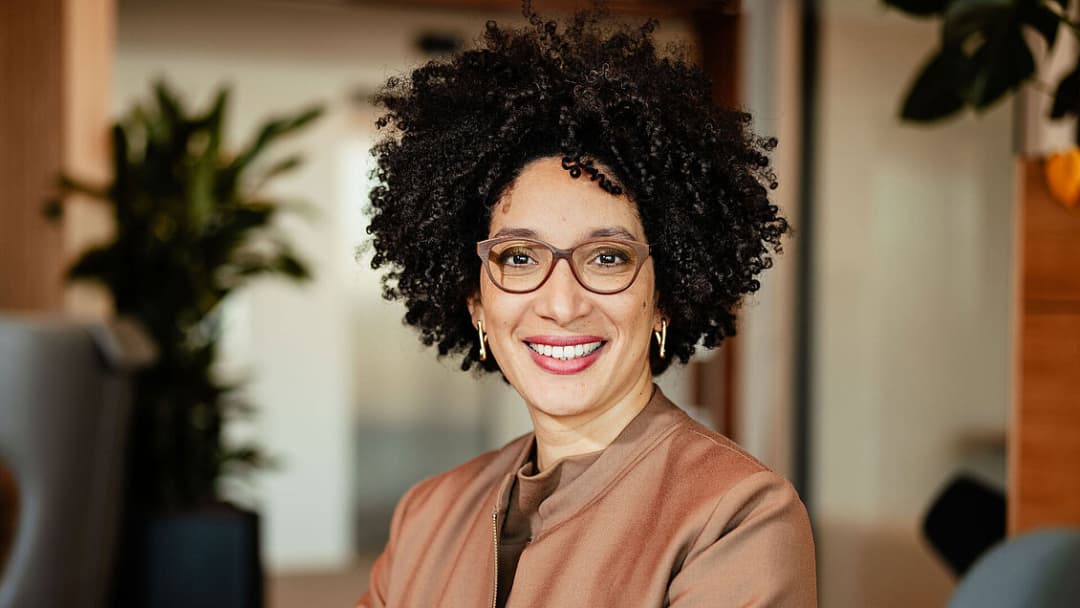
Kenza Ait Si Abbou
Managing Director, Thought Leader, AI Leadership Expert
Kenza Ait Si Abbou is one of the leading minds in artificial intelligence and leadership in the digital age. Like an experienced mountain guide, she knows the challenges of demanding technical and strategic summits. With her comprehensive expertise in technology, strategy, and human-machine interaction, she guides organizations and leaders safely on their path to AI excellence — step by step, with a clear compass and far-sighted vision.
As Managing Director of scailers, she combines technological foresight with pragmatic execution and empathetic leadership — for a future in which artificial intelligence empowers people and makes new summits attainable.

Julia Kaufmann
Expert in Organizational Psychology & New Leadership
Julia Kaufmann is a thought leader in modern leadership culture and potential development in the digital age. With a deep understanding of educational science, psychology, and organizational development, she accompanies teams and leaders on their path to sustainable transformation — mindfully, boldly, and with a human-centered approach.
As founder of Zukunftsmotor, she brings together scientifically grounded insights with practical implementation power. Her vision: organizations in which learning, meaning, and innovation go hand in hand — and leadership puts people at the center.

Christina Redmann
Project Manager with Production Instinct
With over 20 years of experience in the film industry, Christina Redmann has mastered the art of structuring complex workflows, setting priorities, and reliably bringing projects to completion. Whether under time pressure or amid changing requirements — she stays focused, thinks ahead, and ensures that ideas are not only planned, but executed.
Today she brings her strong organizational skills and pragmatic thinking to our projects. With a clear compass and an eye for what matters, she keeps processes moving and drives tasks safely to their goal.
Our Senior Advisors
Beyond our core team, we draw on a circle of senior advisors whose decades of experience across law, governance, technology, and transformation help us navigate the most complex routes.

Naureen Hussain
Senior Expert in AI Governance
Naureen Hussain is a privacy, data governance, and responsible AI specialist with over two decades of experience at the intersection of law, data, and business transformation. Having started her career as a lawyer before holding senior roles at Virgin Media O2, Huawei, and other major organisations, she now advises executive and senior leadership teams on governance strategy, and responsible data and AI practice. Naureen combines sharp legal insight with a practical, business-oriented approach, helping organisations navigate the gap between innovation ambition and governance reality.

Dietmar Ahlemann
Management Consultant
Dietmar Ahlemann is a Management Consultant with over 29 years of experience designing and delivering Digital and IT transformations, with a focus on Automotive, Manufacturing, Financial Services, and Transportation & Logistics. Having held senior roles at IBM, KPMG, Booz Allen Hamilton / Strategy&, PwC, and Horváth, he now advises executive teams as an independent consultant on Digital and IT strategy, organisational design, transformation programmes, M&A due diligences, and leadership coaching. Dietmar combines strategic vision with deep operational expertise, helping organisations turn digital ambition into tangible results.

Anja Hendel
Expert in Technology-driven Organizational Development
Anja brings extensive experience at the intersection of artificial intelligence, digital transformation, and organizational development. As Director of the Porsche Digital Lab, she translated AI into concrete applications and previously co-directed Porsche's digital strategy. At diconium, she supported organizations on their path toward becoming digital, technology-based companies — with a clear focus on the productive use of new technologies.

Fabian Werkmeister
Senior Expert in Data Architecture & Reporting AI-Readiness
Fabian is a Senior Data Engineer and Architect. He owns the layer where most AI initiatives fail before they even begin: the data foundation. After studying economics and working in market research and performance marketing, he moved to the technical side through a data science bootcamp. For five years he built central data architectures at FUNKE Mediengruppe. Today he independently designs and implements pragmatic, lightweight data platforms and works at the interface with Agentic Analytics - with the goal of making reporting AI-ready. Fabian combines business thinking with deep technical execution, helping organisations put their AI ambition on a solid foundation.
Working With Us
Our engagements typically start with leadership teams who want to understand how Artificial Intelligence affects their organization and where to move next. Depending on the starting point, we support:
- AI readiness assessments
- executive AI workshops
- AI governance and operating models
- scaling successful AI initiatives
Every organization begins from a different position. Our role is to help define the next meaningful step.
Artificial Intelligence will shape the future of most organizations. But the path from experimentation to capability is rarely straightforward. It requires clarity, experience, and structured decision-making. That is where we support leadership teams.